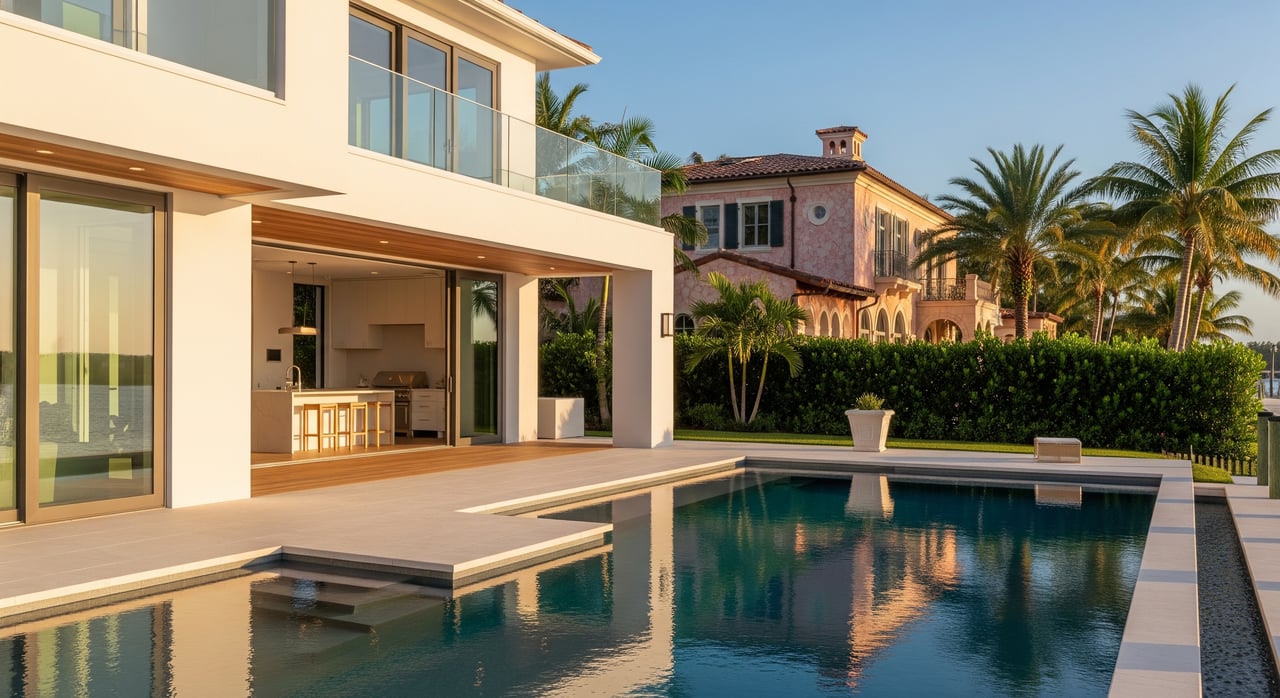
Is your next Jupiter home going to be a brand-new build or a well-kept resale? It is a big decision, especially with coastal insurance, HOA and CDD fees, and timing to consider. If you are relocating to Palm Beach County, you also have to plan around school calendars, temporary housing, and move-in logistics.
This guide breaks down the real tradeoffs for Jupiter buyers. You will compare costs, timelines, inspections, warranties, negotiation leverage, and financing so you can choose with confidence. Let’s dive in.
New vs resale at a glance
New construction gives you modern layouts, current energy codes, and the peace of mind of a builder warranty. You will likely pay a premium over similar resales, and the final price can rise with options and lot premiums. Delivery can take months, which affects your moving plan.
Resale homes can close faster and may offer room to negotiate on price or repairs. You will want a thorough inspection and a budget for near-term maintenance if systems are older. Established neighborhoods often have mature landscaping and known tax bills, which helps planning.
Cost basics in Jupiter
Palm Beach County is a coastal market. Insurance, HOA dues, and possible Community Development District assessments can be meaningful line items. Newer homes can improve insurance outlook through stronger codes, but location and wind exposure remain major drivers.
With new construction, the base price may exclude common upgrades. It is typical to add 5 to 15 percent or more for options like flooring, cabinetry, appliances, lighting, and outdoor packages. With resales, plan for updates or replacements if the roof, HVAC, or water heater are aging.
HOA and CDD fees
Many Jupiter-area communities have homeowners associations. Dues vary widely, from modest amounts for minimal amenities to higher monthly fees in gated or resort-style neighborhoods. New master-planned developments often include pools, clubhouses, and lawn care, which can raise dues.
Community Development Districts are common in Florida. A CDD funds neighborhood infrastructure and amenities, and the assessment typically appears on your property tax bill or as a separate line. To confirm whether a home or lot has a CDD and how much it costs, review disclosures and check Palm Beach County resources. You can explore county links and district information through the Palm Beach County government site. For the legal framework, Florida’s CDDs are established under Florida Statutes, Chapter 190.
Key takeaway: A CDD can add hundreds to several thousand dollars per year depending on the community. Always verify the bond schedule and whether any portion has been paid off.
Insurance and flood exposure
Jupiter’s coastal setting means wind and hurricane risk influence premiums. Newer construction may benefit from updated Florida Building Code requirements that can reduce some components of risk. Still, coastal proximity is a major cost factor.
If the home is in a Special Flood Hazard Area, a lender will require flood insurance. Even outside mapped high-risk zones, flood coverage can be wise. You can review flood maps and zones on FEMA’s flood resources and see consumer guidance on policies through the National Flood Insurance Program. For broader insight into Florida’s insurance market and consumer tips, visit the Florida Office of Insurance Regulation.
Practical tip: Request recent insurance quotes early in your search. Premiums vary by elevation, roof type, opening protections, and distance from the coast.
Timelines and move planning
New construction timelines depend on build stage. For a move-in-ready or “spec” home, expect roughly 3 to 9 months to close depending on finishing. If you are building and selecting options, the window can be 6 to 18 months or more based on permitting and customization.
Resale transactions commonly close in 30 to 90 days. That speed is helpful if you are timing a job start or school schedule. Inspections, appraisal, and HOA document turnaround can influence the exact date.
If you are relocating, plan for overlap. Temporary housing, a leaseback, or bridge options may help if your old home sells before your new home is ready. Ask your lender about rate lock timelines and rate protection if your build extends longer than expected.
Warranties and inspections
Many builders follow a 1–2–10 warranty structure. That typically means one year for workmanship and materials, two years for major systems like HVAC, plumbing, and electrical, and a longer limited term for structural items. Coverage and claims vary by builder, so always get warranty documents in writing. For general guidance on warranty norms, see the National Association of Home Builders.
Independent inspections are essential for both property types. For new construction, schedule a pre-drywall inspection and a final walkthrough with a detailed punch list. Some builders set rules on inspector access, so confirm the process in your contract. For resale homes, a full inspection plus roof, termite, pool, or other specialty checks are standard.
Negotiation and incentives
Builders often keep base prices firm, but they may offer concessions such as closing cost credits, rate buydowns, or option-package discounts. Incentives tend to be more generous when inventory is higher or the market slows. Lot premiums, deposit schedules, and upgrade pricing can also be negotiable.
In resale negotiations, price and terms can be more flexible depending on days on market and seller priorities. You can negotiate repairs, credits, appraisal gaps, and closing timelines. In competitive moments, strong earnest money and clean contingencies help.
Financing differences
Inventory and spec homes usually qualify for standard mortgages similar to resales. For to-be-built or custom homes, you may need a construction-to-permanent loan. These loans fund the build with draws and then convert to a long-term mortgage. During construction, you might make interest-only payments.
Appraisals on new builds can be challenging if there are few closed comps in the community. You may need a higher down payment if the appraisal lands below the contract price. With resales, comps are often more available, though unique upgrades may not fully appraise.
To compare loan options and understand closing costs across lenders, the Consumer Financial Protection Bureau offers helpful checklists and tools. If you are seeking market snapshots to sense overall trends, explore reports from Florida Realtors.
Resale value and resiliency
In Jupiter, long-term value relates to location, lot elevation, community reputation, amenity quality, and condition. Newer homes can attract future buyers with current layouts, efficient systems, and roofs with remaining life. Established resales can benefit from mature streetscapes and known operating costs.
Florida updated wind and roof requirements in its building code after major storms, which can improve durability. Energy efficiency also advances over time. Ask about HERS scores or builder energy specs, window ratings, and insulation levels if you are comparing new communities.
What to verify before you commit
Use this checklist to avoid surprises and protect your budget.
- Disclosures for the property, including known defects and system ages.
- HOA governing documents, rules, budget, and reserve studies.
- Whether the property is subject to a CDD and the annual assessment. Confirm through county records and developer disclosures via the Palm Beach County government site.
- The community’s master plan, phasing, and location of future amenities or roads.
- The current property tax bill and any exemptions on record.
- FEMA flood zone and, if available, the elevation certificate. Start with FEMA’s flood resources.
For new construction, add:
- The builder contract, addenda, and deposit schedule. Consider a Florida real estate attorney review.
- What is included in base price versus options, with itemized upgrade pricing.
- The written warranty terms and the post-closing service process.
- The target build timeline and remedies if delivery is delayed.
- Lot grading plans, drainage easements, and the position relative to sun and amenities.
For resales, add:
- Full home and specialty inspections (roof, termite, pool as needed).
- Roof, HVAC, water heater ages, and any septic or pool equipment details.
- Recent utility bills and maintenance records.
- Any pending special assessments from the HOA.
Model-home tour tips
Model homes are designed to impress. Protect your budget by separating included features from upgrades.
- Photograph rooms and finishes, then request a written list of standard features versus options shown.
- Ask for current lot inventory, upcoming price changes, and any available incentives.
- Confirm HOA dues, CDD assessment amount, and whether special assessments are anticipated.
- Review the deposit schedule, when funds become nonrefundable, and the change-order process.
- Clarify the typical timeline for the specific lot you want and who handles warranty claims after closing.
For reference on flood, insurance, and consumer protections as you compare neighborhoods, visit FEMA, the Florida Office of Insurance Regulation, and the National Flood Insurance Program.
How to choose with confidence
If you value move-in speed, negotiation flexibility, and mature surroundings, a resale can be the most practical fit. Build your offer strategy around inspection results, appraisal risk, and timelines.
If you want modern layouts, up-to-date codes, and the coverage of a builder warranty, new construction can be worth the premium. Price the full package: base, options, lot, HOA dues, CDD assessment, insurance, and window for rate locks.
Either way, focus on total cost of ownership. Include taxes, HOA and CDD, insurance, utilities, and near-term maintenance. Verify documents early, and get inspection professionals involved. When the numbers and timing align with your life, you will feel it.
Ready to compare specific Jupiter communities or shortlist the right resales for your timeline? Let’s map your plan, line up inspections, and get real insurance and fee numbers so there are no surprises. Reach out to Roxana Campbell to start your move with a local, client-first guide.
FAQs
What are CDD fees in Jupiter?
- Community Development District assessments fund neighborhood infrastructure and amenities. Amounts vary by development and usually appear on your tax bill. Verify details through disclosures and the Palm Beach County government site.
How long does a new build take?
- Inventory homes can close in about 3 to 9 months, while build-to-order homes often take 6 to 18 months depending on permitting, materials, and customization.
Do new homes still need inspections?
- Yes. Schedule at least a pre-drywall inspection and a detailed final walkthrough. Independent inspections help document items for warranty service. See warranty norms via the NAHB.
Will I need flood insurance in Jupiter?
- Lenders require it if the home is in a Special Flood Hazard Area. Check maps on FEMA’s site and get quotes through the National Flood Insurance Program.
Are builder prices negotiable?
- Base prices are often firm, but builders may offer incentives such as closing cost credits, rate buydowns, or option discounts, especially on spec homes or when inventory rises.
What financing is used for new construction?
- Spec homes usually use standard mortgages. To-be-built or custom homes may require a construction-to-permanent loan with draw schedules. For loan-shopping tools, visit the CFPB.